
Table of Contents
- Understand Common Sources of Hidden Renovation Costs
- Create a Home Renovation Contingency Budget
- Use a Renovation Quote Checklist Before Hiring
- Manage the Renovation Change Order Process
- Plan for Unexpected Costs When Renovating a Bathroom
- Conduct a Pre-Construction Planning and Inspection
- Track Costs and Control Budget Throughout the Project
- Frequently Asked Questions
Last Updated: October 12, 2026
Understand Common Sources of Hidden Renovation Costs
Hidden costs spiral renovation budgets out of control, not because contractors are dishonest, but because homes hide problems until you tear walls open, making it essential to avoid surprise renovation costs through planning. The most common budget killers fall into predictable categories you can plan for before you hire.
Structural issues and concealed damage
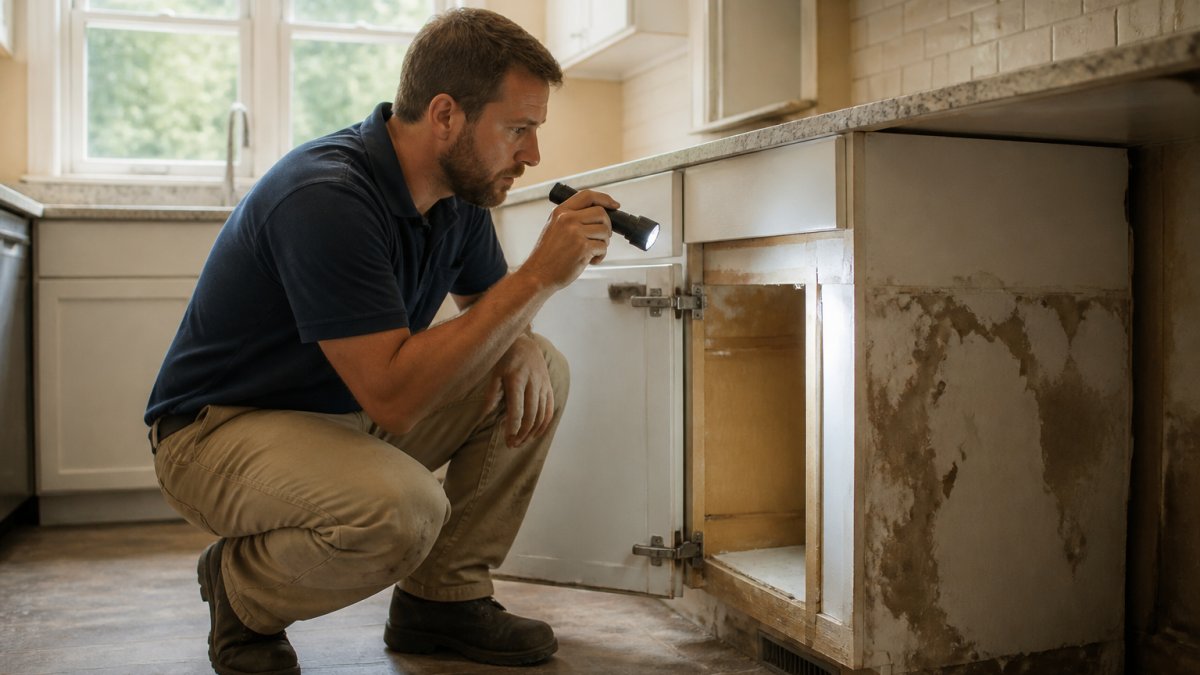
Once demolition begins, contractors often find problems the estimate never accounted for: water damage behind walls, rotting framing, failed plumbing, or electrical that doesn’t meet code.
Older homes are especially vulnerable: hidden mold, foundation settling, or compromised joists only appear when you remove drywall or flooring, and a contractor can’t quote what they can’t see.
Building code compliance and permit requirements
Building codes change. Your 1970s kitchen doesn’t meet today’s standards for electrical outlets, ventilation, or accessibility, and when your contractor pulls permits, the inspector will flag violations that need fixing.
Permit fees and inspections add up, and many homeowners don’t budget for them because they don’t realize permits are mandatory.
Create a Home Renovation Contingency Budget
A contingency fund is your insurance policy to avoid surprise renovation costs, the difference between staying calm when problems surface and panicking. Most contractors recommend 10 to 20 percent, but the right amount depends on your project’s risk level, not a blanket rule.
Sizing contingency by project risk level
Instead of guessing a percentage, score your project on four risk factors that push your reserve up or down.
| Risk factor | Low (add 0%) | Medium (add 3%) | High (add 6%) |
|---|---|---|---|
| Age of home | Built after 2000 | 1970-2000 | Before 1970 |
| Scope | Cosmetic only | One wet room or partial structural | Full gut, structural, or foundation |
| Inspection findings | Clean report | Minor deferred maintenance | Known water, electrical, or structural issues |
| Uncertainty | Fixed design, fixed materials | Some selections pending | Design still evolving |
Start with a base reserve of 10 percent, then add the percentages from each row.
A flat “15 percent” is dangerous: it over-reserves on simple projects and under-reserves on the ones most likely to surprise you.
Round up. If your score lands at 17 percent, budget 20 percent. The cost of an unused reserve is zero; the cost of a short reserve is a stalled project or high-interest debt.
A live budget example with committed, paid, and forecast costs
A percentage only works if you track it. Use a budget with four columns: estimated, committed, paid, and forecast-at-completion.
| Line item | Estimated | Committed | Paid | Forecast at completion |
|---|---|---|---|---|
| Demolition and disposal | $3,000 | $3,000 | $3,000 | $3,000 |
| Cabinets and countertops | $18,000 | $18,000 | $9,000 | $18,000 |
| Plumbing | $6,000 | $6,000 | $3,000 | $8,400 |
| Electrical | $5,000 | $5,000 | $2,500 | $5,000 |
| Flooring | $4,000 | $0 | $0 | $4,000 |
| Permits and inspections | $1,200 | $1,200 | $600 | $1,200 |
| Contingency | $7,500 | $0 | $0 | $5,100 |
| Total | $44,700 | $33,200 | $18,100 | $44,700 |
Here, plumbing came in $2,400 over estimate after a concealed leak was found and a change order approved. That $2,400 came out of contingency, leaving $5,100. Watch the forecast-at-completion column weekly, not the estimate column, and if any line exceeds its estimate, ask why before the next payment.
Protecting your contingency fund from scope creep
Scope creep kills contingency reserves faster than hidden damage does. It happens when you keep adding small changes during the project: a different cabinet color here, upgraded countertops there, and suddenly your entire contingency is spent on choices, not emergencies.
Protect your contingency by:
- Locking down your scope of work before work starts
- Treating contingency as untouchable unless a structural or code issue appears
- Saying no to “while we’re in there” upgrades
When temptation strikes mid-project, ask yourself: “Is this a necessity or a nice-to-have?” Nice-to-haves come from your regular budget or get deferred.
Your contingency percentage is a starting point, not a rule. Score your project on age, scope, inspection findings, and uncertainty, then track committed, paid, and forecast costs weekly so the reserve is a live number, not a guess.
Use a Renovation Quote Checklist Before Hiring
A contractor’s estimate is only as good as what it includes. Many homeowners compare prices without understanding what each estimate covers, which is how you end up shocked by invoices mid-project. Before you hire, know what’s included, what’s excluded, and where hidden costs might hide.
How to read an estimate line by line
Most estimates use three terms that decide who pays when reality differs from the plan. Learn them before comparing bids.
- Allowance. A placeholder dollar amount for a material the homeowner has not selected yet, such as tile or fixtures. If the allowance is $2,000 and you choose $3,500 tile, you pay the $1,500 difference. Ask what happens if you go over.
- Provisional sum. An estimated cost for work that cannot be priced precisely until it is opened up, such as framing repair behind a wall. The final cost is whatever the work actually requires. Ask how overruns are approved.
- Exclusion. Work the estimate does not include at all. Common exclusions are permits, disposal, painting, and repair of concealed damage. An exclusion is not a hidden cost if you read it; it becomes one if you do not.
Compare bids on the same scope. A $40,000 bid that excludes permits, disposal, and painting is not cheaper than a $46,000 bid that includes them. Add the excluded items to the lower bid before deciding.
What to look for in a cost estimate
A solid estimate breaks down costs by category (materials, labor, permits, disposal, timeline) and specifies exactly what work is included and what is not. Look for:
- Itemized material list (not just “cabinets: $X”)
- Labor costs per trade (plumbing, electrical, carpentry)
- Permit and inspection fees
If an estimate is vague, ask for clarification. A contractor who won’t detail their costs is hiding something.
Red flags in contractor bids
Some estimates look cheap upfront, then explode later. Watch for:
- Unusually low prices compared to other bids
- Vague line items (“miscellaneous”: $X)
- No mention of permits or inspections
The cheapest bid is rarely the best deal. You pay for the estimate you don’t see later.
Never sign an estimate that does not state how concealed damage will be priced. If the contract is silent, you have no agreed mechanism when the wall opens and the framing is rotten.
Manage the Renovation Change Order Process
Change orders are formal requests to alter the original scope of work. They happen on almost every renovation. The key is managing them so they don’t derail your budget.
A change order should include:
- What’s changing from the original plan
- New cost for the change
- Impact on timeline
Never approve a change verbally. Get it in writing with the cost attached to protect both you and the contractor.
Approving changes without derailing your budget
When your contractor identifies a problem or you want a modification, follow this process:
- Get a written change order with the cost
- Decide if it’s essential (code violation, structural issue) or optional (design preference)
- If essential, approve it and deduct from contingency
- If optional, decide if you can afford it without touching contingency
- Document your approval in writing
- Track the cost against your running budget
Keep a change order log: every change, its cost, and the date approved. This prevents surprises at final invoice.
Plan for Unexpected Costs When Renovating a Bathroom
Bathrooms are high-risk renovation zones: water damage, plumbing and electrical that trigger code compliance, and problems hidden behind walls and under floors.
Water damage, plumbing, and electrical upgrades
Water damage is the most common bathroom discovery. Leaks behind walls cause rot, mold, and structural damage, and must be fixed before the renovation continues.
Plumbing upgrades are often mandatory. Old galvanized pipes, outdated vent stacks, or drain lines that don’t meet code all need replacing.
Electrical work triggers similar issues. Bathrooms need ground fault circuit interrupter (GFCI) outlets now. Older wiring might need replacement.
Mold remediation and foundation concerns
Mold grows where moisture accumulates, and bathrooms are mold factories. Professional mold removal, not just cleaning, can cost thousands. Foundation issues sometimes surface too: settling, cracking, or water intrusion from below can turn a simple renovation into a structural project. Budget for these possibilities with a bathroom contingency of 20 percent minimum.
Conduct a Pre-Construction Planning and Inspection
Before you sign a contract, hire a professional home inspector to assess your space. This isn’t a general home inspection; you’re looking specifically for problems that will affect your renovation. The report tells you what’s likely to surface, gives your contractor realistic information for an accurate estimate, and protects you from surprises.
Room-by-room risk assessment checklist
Walk through your space with your contractor and note potential issues:
- Kitchen: Check for water stains under sink, soft spots in flooring, cracks in walls, outdated electrical, gas line safety
- Bathroom: Look for water damage, mold, soft subfloor, old plumbing, ventilation issues, foundation cracks
- Walls: Tap for hollow spots, check for water stains, look for settling cracks
Document everything with photos. This becomes your reference if problems emerge during work.
Documentation and photo records
Take photos before work starts: every wall, floor, ceiling, and fixture, with close-ups of problem areas and wide shots of the whole space. They serve two purposes: proof of the space’s condition if disputes arise, and help for your contractor in identifying hidden issues that might affect cost. Keep all inspection reports, estimates, and photos in one folder and reference them throughout the project.
Track Costs and Control Budget Throughout the Project
Once work begins, your budget needs active management. Review invoices as they arrive, check them against your estimate, confirm that work completed matches work billed, and question anything that doesn’t match your agreement.
Weekly cost reconciliation and invoice review
Every week, ask your contractor for work completed, materials used, labor hours and rates, and any change orders or additional costs. Compare it to your estimate and running total, and address any overrun immediately.
Create a simple spreadsheet:
| Item | Estimated | Spent | Remaining |
|---|---|---|---|
| Materials | $X | $X | $X |
| Labor | $X | $X | $X |
| Permits | $X | $X | $X |
| Contingency | $X | $X | $X |
| Total | $X | $X | $X |
Update it weekly. This gives you real-time visibility into your budget.
When a surprise occurs: prioritizing and funding options
When hidden costs surface, you have choices:
- Cover it from contingency, this is what contingency is for
- Defer the work, address it after the main project finishes
- Reduce scope elsewhere, cut something optional to fund the essential fix
- Renegotiate timeline, spread costs over a longer project
Prioritize essential fixes (code violations, structural damage, safety issues) over nice-to-haves. A foundation crack is non-negotiable; upgraded hardware can wait. If contingency runs short, avoid high-interest debt and instead defer non-essential work or scale back finishes temporarily.
Surprise renovation costs derail budgets because most homeowners don’t plan for what they can’t see.
Frequently Asked Questions
How much contingency should I budget for a home renovation?
Most experts recommend 10-20% of your total project budget as a contingency fund. For smaller projects under $25,000, consider 15-20%. For larger renovations, 10-15% is often sufficient because costs are more predictable at scale. The exact amount depends on the age of your home, scope of work, and how thoroughly you’ve inspected for hidden damage before construction begins. A pre-renovation inspection helps you size contingency more accurately.
What hidden costs should I expect when renovating a bathroom?
Common hidden bathroom costs include water damage repair, outdated plumbing that needs replacement, electrical upgrades to meet current building codes, mold remediation, structural rot in walls or subfloors, and permit or inspection fees. Older bathrooms often have compromised ventilation, which compounds moisture problems. Asbestos or lead paint abatement can add significant expense if your home was built before the 1980s. Always budget for at least one surprise in a bathroom renovation.
How can I avoid surprise costs during a renovation?
Start with a detailed pre-construction inspection and document existing conditions with photos. Get a written scope of work and fixed-price contract that clearly lists what is and is not included. Establish a formal change-order process so unexpected work is approved and priced before it begins. Set aside a contingency fund (10-20% of budget) and track all invoices and expenses weekly. Hire a reputable contractor with references and ensure they carry liability insurance and provide warranties on their work.
What should a renovation quote include?
A complete quote must itemize labor, materials, permits, inspections, and disposal costs. It should specify the scope of work in detail, what is included and what is excluded. The quote should state the contract type (fixed-price, time-and-materials, or design-build), timeline, payment schedule, and any warranty or guarantee. Ask the contractor to clarify how change orders will be handled and what happens if structural issues or code violations are discovered. Compare multiple bids side-by-side to identify gaps or unusually low estimates.