
Table of Contents
- Why Homeowners Choose Alternatives to Traditional Bathroom Tile
- Bathroom Wall Panels: Acrylic and Composite Options
- Waterproof Bathroom Wall Panels: Installation and Durability
- Stone and Marble-Look Surfaces for Wet Areas
- Wood, Shiplap, and Wainscoting: Creating Warmth in the Bathroom
- Bathroom Wall Paint and Protective Coatings
- Tile Alternatives for Shower Walls: Waterproofing and Sealing
- Cost, Maintenance, and Long-Term Value Comparison
- Frequently Asked Questions
Last Updated: October 7, 2026
Why Homeowners Choose Alternatives to Traditional Bathroom Tile
When it comes to bathroom renovation, many homeowners assume tile is the only option. It’s not. Many homeowners discover that alternatives to traditional bathroom tile for walls offer better aesthetics, easier maintenance, or faster installation than they expected.
The shift away from tile isn’t about rejecting a classic material; it’s about matching the right surface to your actual needs. Traditional ceramic and porcelain tile demands grout maintenance, can crack under settling, and takes weeks to install properly. For homeowners juggling budgets and timelines, alternatives to traditional bathroom tile for walls provide practical solutions that tile simply cannot match.
At Pro Kitchen & Bath, we guide renovations toward materials that suit specific situations. A stone-look panel can offer significant labor savings. Acrylic can help address mold concerns in poorly ventilated bathrooms. Paint can refresh an outdated space affordably. The key is understanding what each material does well, and where it falls short.
This guide walks you through seven proven alternatives to traditional bathroom tile for walls, breaking down waterproofing, installation, cost, and maintenance for each. You’ll find comparison tables, real-world trade-offs, and a framework for choosing the right surface for your bathroom’s specific demands.
Bathroom Wall Panels: Acrylic and Composite Options
Acrylic and composite wall panels represent the fastest, most waterproof alternative to tile. These materials ship as large sheets that bond directly to studs or existing walls, eliminating grout lines entirely.
Acrylic panels are thermoformed plastic sheets, typically a few millimeters thick, that come in white, bone, or custom finishes. They’re non-porous, meaning water cannot penetrate the material itself. Installation involves adhesive or mechanical fasteners; no mortar, no grout, no curing time.
Composite panels blend acrylic with reinforced backing, offering added rigidity. Both materials excel in wet areas because they’re seamless and easy to seal at corners and edges.
The real advantage emerges during maintenance. Acrylic panels wipe clean with mild soap and water. No grout to scrub, no mold hiding in seams. For bathrooms with high humidity or poor ventilation, this alone justifies the material choice.
The limitation is aesthetic. Acrylic lacks the depth and texture of natural stone or tile. It can feel plastic-like in certain finishes, though high-end composites bridge this gap convincingly.
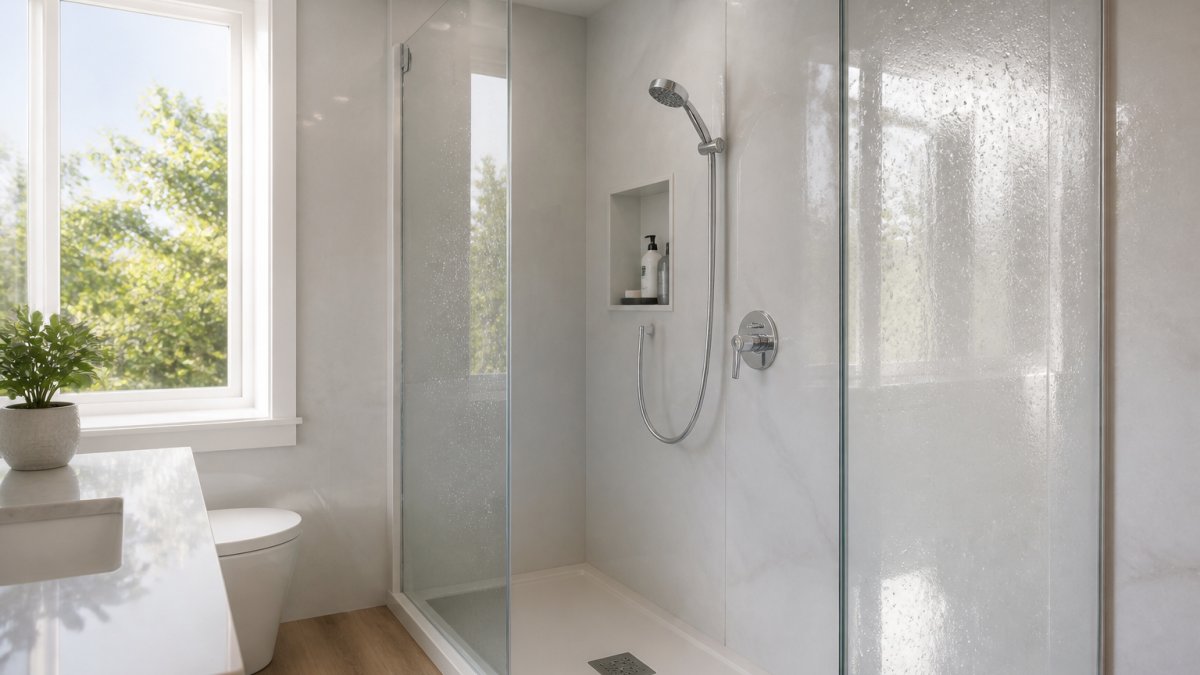
Waterproof Bathroom Wall Panels: Installation and Durability
Waterproof bathroom wall panels succeed because they’re designed from the ground up to shed water, not absorb it. The distinction matters: traditional tile is waterproof only when grout is sealed, and that seal degrades over time. Panels remain waterproof regardless of maintenance.
Installation of waterproof bathroom wall panels begins with surface preparation. The wall must be flat, clean, and dry. Existing tile can stay if the substrate is solid; panels bond over it. Moisture barriers (typically 6-mil polyethylene) go down first in wet zones.
The sealing step is critical. Silicone caulk at seams prevents water from migrating behind the panels. A common mistake is using grout or caulk that cracks seasonally. High-quality silicone remains flexible and maintains its seal through temperature swings and house settling.
Durability depends on material quality and installation precision. Premium acrylic and composite panels last 20+ years without degradation. Budget panels may develop yellowing, brittleness, or surface crazing within 5-10 years, especially in direct sunlight. Installation errors, gaps, poor sealing, or inadequate substrate prep accelerate failure.
Repairability is straightforward. A damaged panel section can be cut out and replaced without disturbing surrounding areas. Try that with tile, and you’ll understand why panels appeal to homeowners planning long-term occupancy.
Stone and Marble-Look Surfaces for Wet Areas
Stone and marble-look finishes bring luxury aesthetics to bathrooms without the cost, weight, or maintenance headaches of real stone. Modern engineered stone-look surfaces replicate natural materials convincingly while offering superior waterproofing.
Real marble and granite are porous; they absorb water and stain easily. Sealing helps but requires reapplication every 1-2 years. In a wet bathroom, natural stone is a liability disguised as elegance. Stone-look alternatives eliminate this problem.
Engineered stone-look surfaces come in two main forms: acrylic composites with stone texture, and solid surface materials like Corian. Both are non-porous, resist staining, and require only soap and water for cleaning. The visual difference from real stone narrows each year as manufacturing improves.
Installation resembles acrylic panel installation: adhesive or mechanical fasteners, silicone sealing at joints. Labor is minimal because sheets are large. Stone-look panels can significantly reduce installation time compared to traditional tile.
The trade-off is authenticity. Real marble has depth, veining variation, and a tactile quality that composites cannot fully replicate. For homeowners who prioritize durability and ease of maintenance over material purity, stone-look surfaces win decisively.
Cost sits between basic acrylic and real stone, typically 20-30% more than plain white panels, substantially less than natural marble.
Wood, Shiplap, and Wainscoting: Creating Warmth in the Bathroom
Wood, shiplap, and wainscoting introduce warmth and character that tile and panels cannot match. These materials work best in low-moisture zones: above wainscoting height, in powder rooms, or in half-baths where direct spray is minimal.
Shiplap, horizontal boards with overlapping edges, has become popular in bathroom renovations. Real wood shiplap requires protective coatings: primer, paint, and polyurethane sealant.
A common mistake is installing unfinished wood and expecting paint alone to protect it. Moisture will find gaps, seep behind paint, and cause rot within 2-3 years. Proper installation means sealing before installation, then sealing again at seams and fasteners.
Engineered wood-look finishes (vinyl or laminate shiplap) eliminate the maintenance burden. They’re waterproof, won’t warp, and require only wiping clean. The trade-off is authenticity; they look convincing from a distance but lack the grain depth and character of real wood.
Wainscoting (wood paneling on the lower 3-4 feet of walls) works well in bathrooms when the upper wall uses a waterproof surface. This layered approach combines warmth below with functionality above.
The limitation is clear: wood-based materials cannot handle direct shower spray or constant moisture. Use them strategically, and they add character for decades. Ignore the moisture exposure rules, and they fail within years.
Bathroom Wall Paint and Protective Coatings
Paint represents the simplest, most affordable alternative to tile. A fresh coat transforms an outdated bathroom in days. But not all paint works equally in wet environments.
Bathroom paint must resist moisture and mold. Acrylic latex paint with mildew-resistant additives is the standard choice. Semi-gloss or satin finishes shed moisture better than flat finishes.
Surface preparation is everything. The wall must be clean, dry, and primed. Existing tile can stay if it’s bonded solidly to the substrate. Paint adheres poorly to glossy surfaces, so dull the existing finish with sandpaper first.
Protective coatings add durability. A clear polyurethane topcoat over paint creates a wipeable, moisture-resistant surface. Some homeowners use epoxy paint instead; it’s harder, more waterproof, and lasts longer than standard latex paint.
The advantage is cost and speed. A bathroom can be repainted for a few hundred dollars in a weekend. The disadvantage is longevity. Paint chips, peels, and requires repainting every 5-7 years in high-moisture zones.
For powder rooms and bathrooms with good ventilation, paint works well. For shower surrounds and tub enclosures, paint alone is insufficient. Combine it with a moisture barrier or use it only on non-spray walls.
Tile Alternatives for Shower Walls: Waterproofing and Sealing
Shower walls demand the most rigorous waterproofing of any bathroom surface. Water hits these walls constantly, at pressure, and seeks every gap. Tile alternatives must match tile’s waterproofing performance or exceed it.
Acrylic and composite panels excel here because they’re inherently waterproof. No grout to fail, no porous substrate to absorb water.
Installation of tile alternatives for shower walls requires a moisture barrier beneath the surface. Polyethylene sheeting or specialized waterproof membranes go on first, then panels or other surfaces bond over them.
Silicone caulk at all joints is non-negotiable. Grout-based caulk cracks and fails in shower environments. High-quality silicone remains flexible and waterproof for 10+ years. Resealing every 3-5 years extends this window.
Stone-look composites and engineered surfaces work in showers if properly sealed. Real stone does not; it will absorb water and develop mold despite sealing attempts.
Paint and wood-based materials have no place in direct shower spray. The moisture exposure is simply too intense.
The real difference between successful and failed shower surfaces comes down to sealing discipline. A perfectly installed panel with poor joint sealing will fail. A moderately installed panel with meticulous sealing will last decades.
Cost, Maintenance, and Long-Term Value Comparison
Material choice ultimately hinges on cost, upkeep, and how long you plan to stay in your home.
| Material | Typical Installation Cost | Maintenance Effort | Lifespan | Best For |
|---|---|---|---|---|
| Ceramic/Porcelain Tile | Moderate to High | Grout cleaning, resealing | 15-20 years | Traditional aesthetics, durable |
| Acrylic Panels | Moderate | Minimal (soap & water) | 15-20 years | Fast installation, low maintenance |
| Stone-Look Composite | Moderate to High | Minimal | 20+ years | Luxury appearance, waterproof |
| Shiplap/Wood | Low to Moderate | High (sealing, repainting) | 5-10 years | Character, low-moisture zones |
| Paint | Low | Moderate (repainting every 5-7 years) | 5-7 years | Budget renovations, quick updates |
Acrylic panels often deliver the best long-term value for bathrooms with heavy use. The initial cost is comparable to tile, but labor is faster (saving money), and maintenance is virtually nonexistent.
Stone-look composites cost more upfront but provide luxury aesthetics without the maintenance burden of real stone. For homeowners prioritizing appearance and durability equally, they’re worth the premium.
Paint is the budget choice, ideal for cosmetic updates or rental properties. Accept that you’ll repaint every 5-7 years and plan accordingly.
Wood and shiplap appeal to homeowners who value character over convenience. They work beautifully in the right context but require discipline to maintain properly.
Moisture barriers matter more than surface material. A budget panel with proper waterproofing underneath will outlast premium tile installed over an inadequate substrate. Never skip the moisture barrier step, regardless of which surface you choose.
Choosing the right surface for your bathroom walls is about matching material properties to your actual use.
Acrylic and composite panels offer speed, durability, and minimal upkeep, making them a strong recommendation for many bathroom renovations. Stone-look surfaces bring luxury without the headaches of real stone.
The mistake most homeowners make is choosing based on appearance alone, then discovering the surface can’t handle the moisture or requires constant maintenance.
Ready to explore which alternative works best for your bathroom? Book a FREE consultation with Pro Kitchen & Bath to discuss your space, your goals, and the right material choice for your renovation.
Frequently Asked Questions
What are the best alternatives to traditional bathroom tile for walls?
The most durable alternatives include acrylic and composite bathroom wall panels, stone-look surfaces, waterproof paint systems, and engineered stone. Each offers different benefits: panels require minimal maintenance, stone provides luxury aesthetics, and paint offers budget-friendly coverage. The best choice depends on your bathroom layout, moisture exposure, budget, and design preference. Wet areas like shower surrounds benefit most from waterproof panels or sealed stone, while powder rooms can accommodate wood finishes or quality paint.
Are waterproof bathroom wall panels cheaper than tile?
Waterproof bathroom wall panels typically cost less to install than ceramic or porcelain tile because they require simpler surface preparation and fewer materials. Panels install faster with fewer seams and no grout, reducing labor time. However, total cost depends on panel quality, room size, and whether existing walls need repair. Acrylic panels are generally more affordable than stone-look composites. For accurate pricing for your specific project, consult with a renovation specialist who can assess your space and provide a detailed quote.
Can you use waterproof paint instead of tile in a shower?
Specialized waterproof bathroom wall paint can protect walls in spray zones and humid bathrooms, but it is not ideal for direct shower spray. Paint works best on walls outside the immediate shower surround. For true shower walls where water hits directly, acrylic panels, stone-look surfaces, or properly sealed tile remain more reliable. Paint requires regular maintenance and reapplication, while panels and stone offer longer-lasting water protection. Always use high-quality, moisture-resistant formulations and ensure proper surface preparation and ventilation.
What is the easiest bathroom wall material to clean and maintain?
Acrylic and composite bathroom wall panels are the easiest to maintain; they require only regular wiping with a damp cloth and mild soap. Unlike grout in tile, panels have minimal seams and don’t trap mold or mildew. Waterproof paint is also straightforward to clean but may need touch-ups over time. Stone surfaces require periodic sealing and careful cleaning to avoid staining. Wood and shiplap need more attention to prevent moisture damage. For busy households, panels offer the best balance of durability and low maintenance.